Should you buy a forklift when a stacker would do the job for a fraction of the price? We hear that question often from Kansas City business owners. Most are about to overspend or buy a machine that can’t reach their top rack.
The pallet jack vs stacker vs forklift decision comes down to five things: load weight, lift height, aisle width, floor conditions, and how many pallets you move per shift. This guide covers each one.
Quick Comparison at a Glance
| Feature | Pallet Jack | Walkie Stacker | Forklift |
| Main job | Moving pallets across the floor | Lifting pallets onto low and mid racks | Heavy lifting, high racks, long runs |
| Typical lift height | A few inches | Up to about 15 to 16 ft | 10 to 30+ ft |
| Typical capacity | 4,500 to 5,500 lbs | 2,000 to 4,000 lbs | 3,000 to 50,000+ lbs |
| Aisle width | Very tight | Roughly 6 to 8 ft | Roughly 11 to 13 ft (counterbalance) |
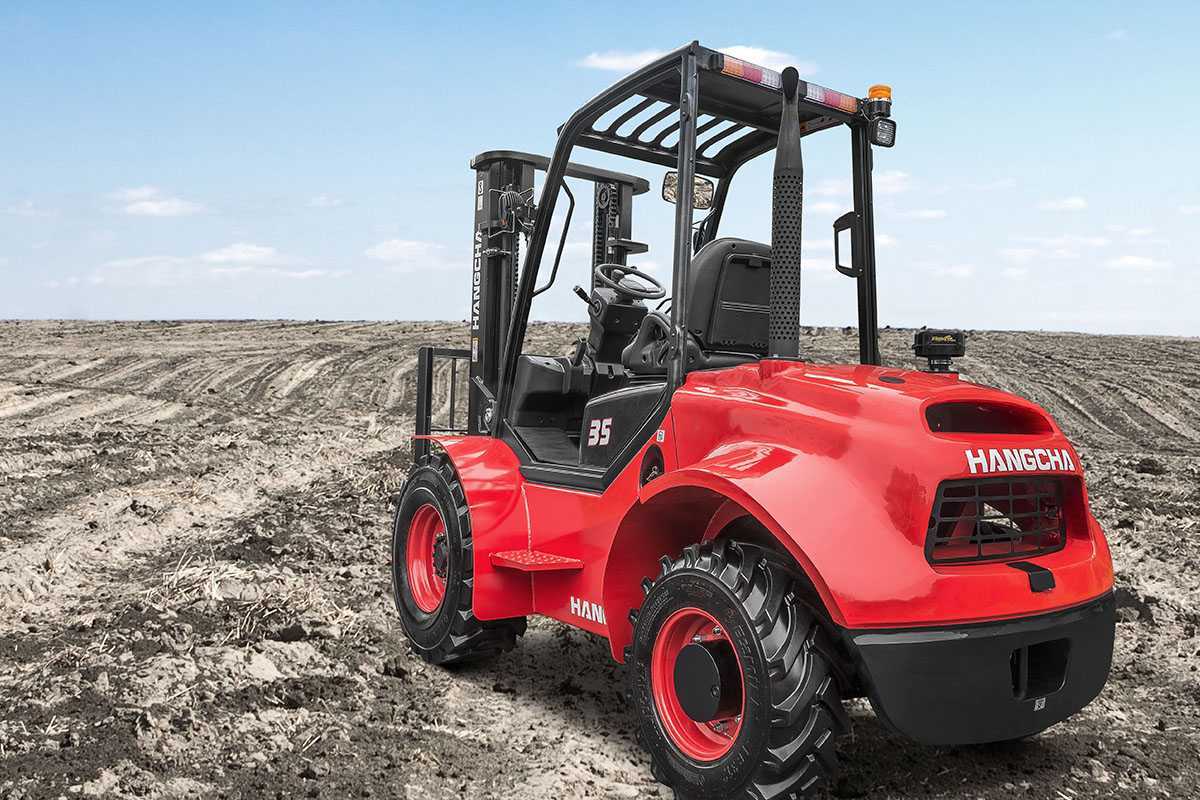
| Ramps and outdoors | Flat floors only | Flat indoor floors | Indoor, outdoor and rough terrain models |
| Power | Manual or electric | Semi or full electric | Electric, LPG or diesel |
These are typical ranges. Your exact numbers depend on the model, so always check the data plate.
When a Pallet Jack Is All You Need
A pallet jack is the right call when your pallets stay on the floor. It works well for unloading trailers, moving stock from the dock to staging, and supplying retail backrooms.
Manual vs Electric Pallet Jacks
- Manual: This is the lowest-cost option. It suits light or occasional use over short distances.
- Electric walkie: It has powered travel, so operators don’t wear out on heavy loads or longer trips.
- Electric rider: The operator stands on a platform. It’s built for long runs across large facilities.
Where Pallet Jacks Fall Short
Pallet jacks can’t stack. They also struggle on ramps, cracked concrete and rough dock plates. If your team pushes a manual jack more than a few dozen times a shift, fatigue and slower output start costing you money.
Pro Tip: Count your pallet moves for one full week before you buy. High-volume horizontal work almost always justifies an electric pallet jack over a manual one.
When a Stacker Makes More Sense
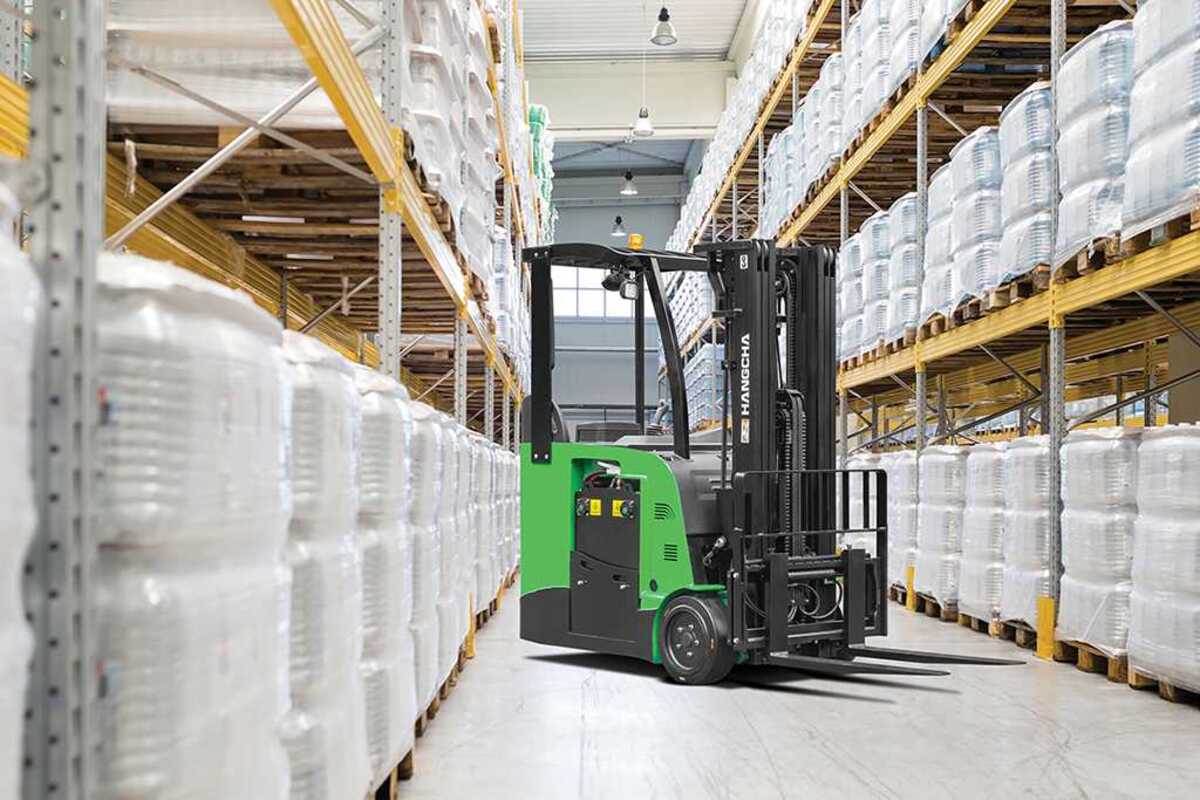
A stacker fills the gap between a pallet jack and a forklift. It lifts pallets onto shelving in tight spaces without the footprint or price of a full forklift. Small warehouses, mezzanines and light manufacturing shops get a lot of value from one.
Straddle or Counterbalanced?
Straddle stackers have outrigger legs that sit outside the pallet. They are stable and compact, but they need open-bottom pallets or enough room for the legs to straddle the load.
Counterbalanced stackers have no outriggers. They handle closed-bottom and double-faced pallets, but they need a bit more aisle space.
Watch the Capacity at Height
A stacker rated for 3,000 lbs may only handle a fraction of that at full lift height. This derating catches many buyers off guard.
Key Takeaway: Size your stacker for your heaviest pallet at your highest beam. The capacity listed in the brochure is not the number that matters.
When You Need a Forklift
A forklift is the right choice when your operation demands more than a stacker can safely deliver. You likely need one if you:
- Lift loads over roughly 3,000 to 4,000 lbs
- Store product above 15 feet
- Run multiple shifts with constant travel
- Load trucks from the ground or work outdoors
- Cross ramps, gravel or uneven pavement
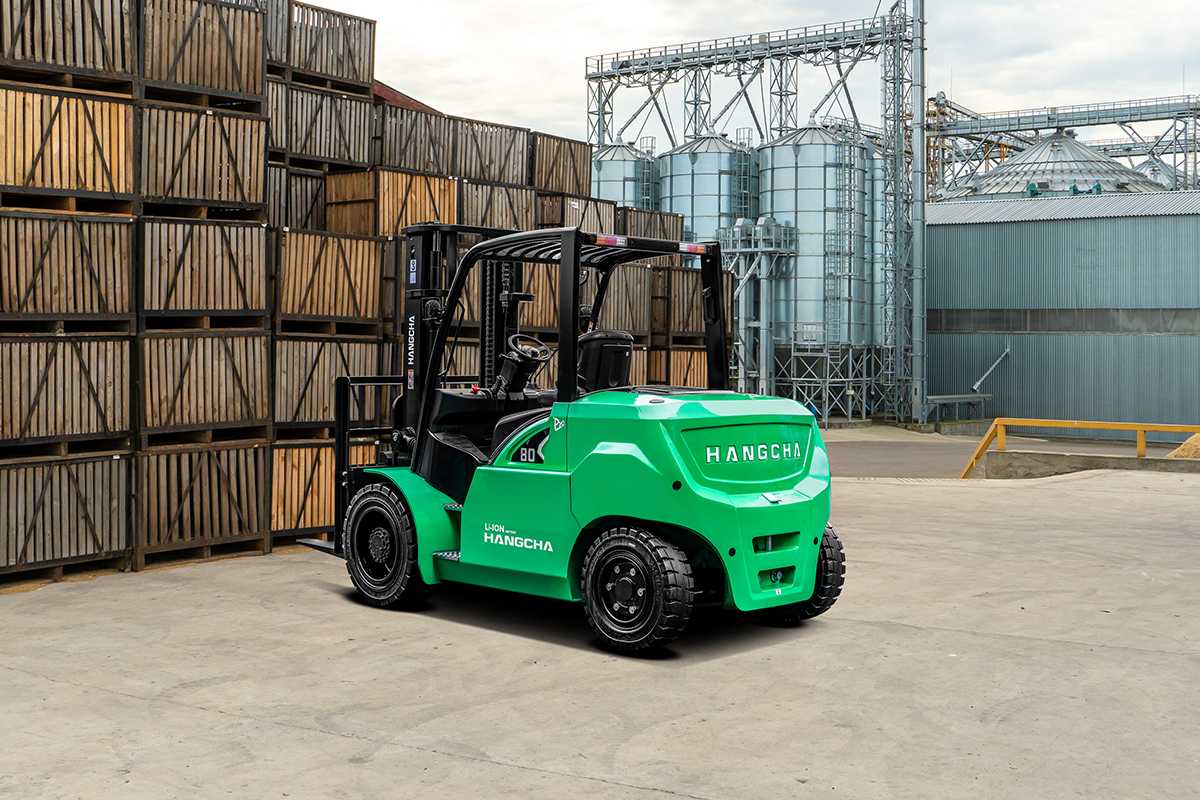
Electric counterbalance trucks handle most indoor work. Reach trucks serve high, narrow-aisle racking. LPG and diesel models cover yards and outdoor jobs.
Pallet Jack vs Stacker vs Forklift: 5 Questions to Ask First
Answer these five questions and the right machine usually becomes clear.
- How heavy is your heaviest pallet? Measure it at the height you’ll actually lift it to.
- How high is your top load beam? Under 15 feet points toward a stacker. Above that points toward a forklift.
- How wide are your aisles? Measure rack to rack, not wall to wall.
- What surfaces will you cross? Ramps, dock plates and outdoor pavement quickly rule out pallet jacks and stackers.
- How many pallets do you move per shift? High volume favors powered rider equipment or a forklift.
Pro Tip: Check the bottom of your pallets. Closed-bottom pallets won’t work with a straddle stacker, and that one detail can change your whole equipment choice.
What Each Machine Costs to Own
Upfront Price: Pallet Jack vs Stacker vs Forklift
As a rough ballpark:
- Manual pallet jacks often run a few hundred dollars.
- Electric pallet jacks and walkie stackers usually land in the thousands.
- New electric forklifts commonly start in the tens of thousands.
Batteries, chargers and attachments add to that total.
Upfront price is only part of the picture. Battery replacement, planned maintenance and operator time matter just as much over five years. A machine that’s too small for the job also costs you in slow throughput and avoidable repairs.
Rent, Buy New, or Buy Used?
- Rent: Best for seasonal peaks, short projects or testing a machine before you buy.
- Buy new: Best for daily, multi-shift use where uptime and warranty coverage matter most.
- Buy used or reconditioned: A strong value for single-shift work or a tight budget.
Financing and leasing can spread the cost over time and keep your cash available for other needs.
Need help choosing the right equipment for your warehouse?Contact RDS Equipment for a free consultation. Our team can visit your site, measure your aisles, and recommend the best fit.
Training Rules for Powered Pallet Jacks and Stackers
Many buyers assume only forklifts require certified operators. Under OSHA 29 CFR 1910.178, electric pallet jacks and powered stackers count as powered industrial trucks too. Operators need training and a performance evaluation before they use them.
Manual pallet jacks fall outside that standard, but basic handling training still prevents injuries. For any powered unit, make sure your team:
- Reads the data plate and understands load center
- Completes a pre-use inspection every shift
- Knows the capacity limits at different lift heights
Key Takeaway: Budget for operator training on every powered machine you buy, including small ones.
Frequently Asked Questions
Can a stacker replace a forklift?
In many small warehouses, yes. A stacker works well when loads stay under its rated capacity at height, racks top out around 15 feet, and work stays indoors on flat floors.
Can stackers use lithium batteries?
Yes. Many current electric stackers and pallet jacks offer lithium options. These batteries charge faster and need no watering. You can learn more on our lithium battery page.
Can a pallet jack go up a ramp?
Only gentle ramps, and only with care. Steep inclines are a job for a forklift.
Get the Right Fit the First Time
The right machine moves your product safely, fits your aisles, and pays for itself. The wrong one leaves you with slow output, safety risks, or an upgrade you didn’t plan for.
Since 1998, our team has helped businesses across Kansas City, Independence, Lee’s Summit, Olathe and Lenexa choose equipment that fits. We offer new Hangcha models, used and reconditioned units, rentals, and planned maintenance.
Call us or request a quote today. We’ll come to your site and help you settle the pallet jack vs stacker vs forklift question with confidence.