Most first-time renters call us expecting to hand over a driver’s license and drive off our lot. The real forklift rent requirements work differently, and the paperwork catches crews off guard on delivery day far more often than the equipment does.
None of it is complicated once you know what is coming. Here is what dealers ask for, what OSHA holds you responsible for, and how to get everything approved before your project starts.
The Forklift Rent Requirements Checklist
Business and individual renters face two different processes, so start with the list that matches you.
What Business Renters Need
- An approved credit application or a credit card on file
- A Certificate of Insurance listing the dealer as additional insured
- Operators trained and certified under OSHA standards
- Job specs: load weight, lift height, indoor or outdoor use
- Confirmed site access for delivery
What Individuals and Homeowners Need
- A valid government-issued ID
- A credit card for the rental and deposit
- Delivery arranged, or a trailer rated for the machine
- Basic operating knowledge before the unit arrives
Key Takeaway: Business rentals hinge on insurance paperwork. Personal rentals hinge on transport. Sort out yours early, and the rest moves quickly.
Do You Need a License to Rent a Forklift?
There is No Forklift License
No state issues a forklift license. What OSHA requires under 29 CFR 1910.178(l) is operator certification, which your employer provides and documents. A driver’s license has nothing to do with operating the machine, though you will need one to tow it.
Your Company Carries the Responsibility
We rent you the equipment. OSHA holds your business accountable for making sure whoever climbs into the seat is qualified. Dealers do not certify your operators.
OSHA Operator Certification, Explained
What Certification Requires
- Formal instruction. Classroom or online coursework on safe operation.
- Practical training. Hands-on demonstration and supervised practice.
- Performance evaluation. A qualified evaluator watches the operator run the machine.
Federal child labor law sets 18 as the minimum age for non-agricultural forklift operation, which OSHA confirms in its bulletin on young workers and forklifts. Under 1910.178(l)(6), your certification record needs the operator’s name, the training date, the evaluation date, and the identity of the person who performed the training or evaluation.
Paragraph (l)(4)(iii) requires that operator performance be evaluated at least once every three years. Refresher training comes sooner after an accident or near miss, after unsafe operation, when the operator moves to a different type of truck, or when workplace conditions change.
Key Takeaway: An online course alone does not certify anyone. The hands on evaluation still has to happen on your equipment.
Certification is Equipment and Site Specific
A card from a previous employer does not automatically cover the unit we deliver. Someone certified on a Class I electric sit-down rider is not qualified by default on a rough terrain unit. Training has to match the truck class and the conditions where it will run.
Temporary Workers and Staffing Agencies
OSHA covers this in Temporary Worker Initiative Bulletin No. 7. The staffing agency and the host employer share responsibility as joint employers. The agency usually delivers the general training. The host employer covers site-specific training and runs the practical evaluation.
Pro Tip: Pull your certification records before you call for a quote. If the last evaluation date is over three years old, schedule a re-evaluation now rather than finding the gap during an inspection.
Insurance Requirements Every Dealer Checks
What Your Certificate of Insurance Must Show
Your agent can usually issue a COI within a day or two. It must show:
- General liability, commonly $1 million per occurrence and $2 million aggregate
- Additional insured endorsement naming the rental dealer
- Waiver of subrogation in favor of the dealer
- Rented equipment coverage with the dealer named as loss payee
- Workers’ compensation coverage
- Auto liability if you plan to haul the unit yourself
Damage Waiver or Your Own Coverage
Dealers typically offer a damage waiver at 10 to 15 percent of the rental rate. A waiver is not insurance. It is a contract term limiting what the dealer can collect from you for accidental damage.
If you carry rented equipment coverage at replacement value, you may not need one. If you do not, the waiver usually costs less than a deductible fight after an incident.
What a Damage Waiver Will Not Cover
Most waivers exclude tire damage, overloading, misuse, damage caused by an untrained operator, and theft or vandalism when the machine was left unsecured.
Key Takeaway: A missing additional insured endorsement is one of the most common reasons a rental stalls. Ask your agent to confirm it is on the certificate before sending it over.
Unsure whether you meet the forklift rent requirements for your job? Call RDS Equipment for a free rental consultation.
Credit, Specs, and Site Access
Account and Credit Approval
New commercial customers complete a credit application. Short-term renters can often use a credit card and a deposit instead. Call us early if your start date is tight.
Read the agreement for meter limits. The industry standard is 8 hours per day, 40 hours per week, and 160 hours per month, with anything beyond that billed at an overtime rate.
The Specs We Will Ask For
Have these ready and your quote takes minutes:
- Heaviest load weight and load center
- Maximum lift height and any overhead clearance limits
- Indoor, outdoor, or both
- Aisle width, floor surface, and dock access
- Rental duration
Capacity ratings drop as lift height increases and when attachments are added, so quote us the heaviest load you will actually lift.
Site Access and Transport
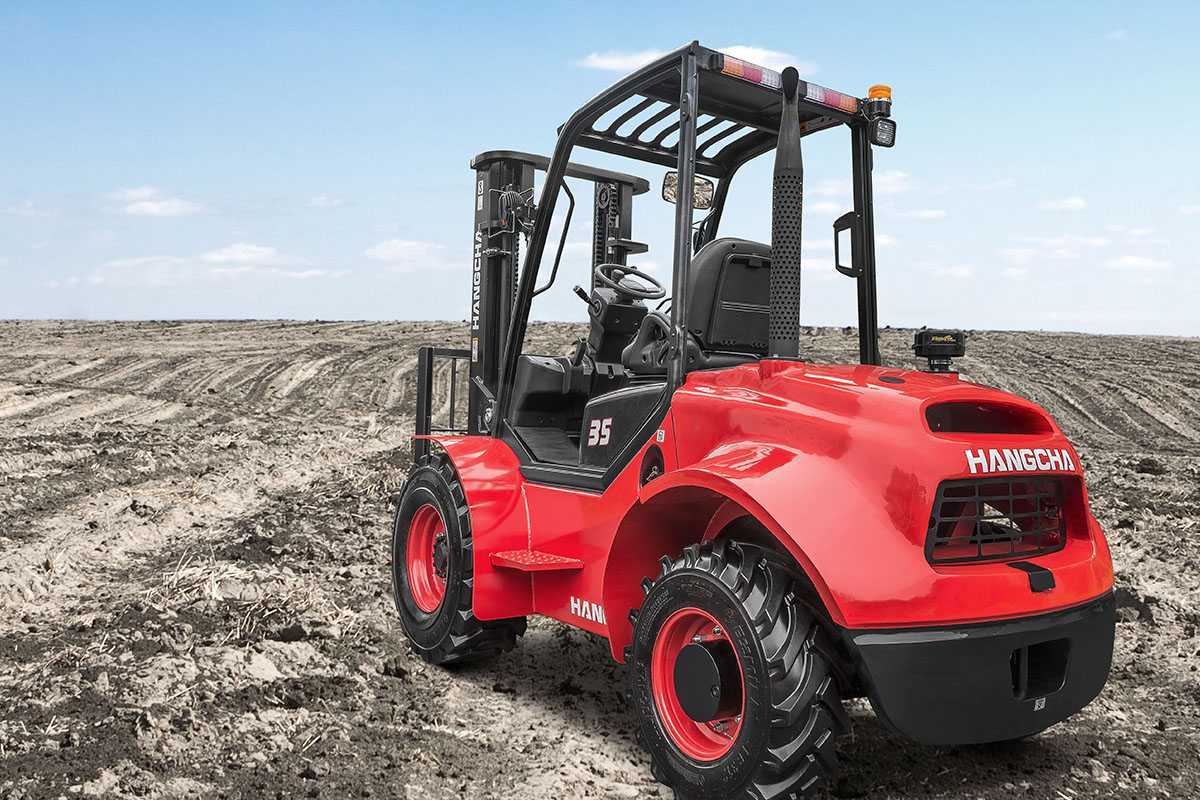
Electric units need the correct charger voltage and an outlet. LP units need a tank exchange plan. Pneumatic tires handle rough ground that would stop a cushion tire machine.
A forklift weighs roughly 1.5 to 2 times its rated capacity, so a 5,000-pound unit can push 9,000 pounds. Under 49 CFR 383.91, a Class A CDL applies only when two conditions are both true: the gross combination weight rating reaches 26,001 pounds or more, and the trailer is rated above 10,000 pounds. Check both numbers and your state rules. Most customers find delivery cheaper and safer.
Pro Tip: Measure your lowest doorway and tightest turn before you book. Overhead clearance stops more deliveries than weight does.
Missed Forklift Rent Requirements That Delay Delivery
These are the issues that most often push a delivery back:
- A COI missing the additional insured endorsement
- Liability limits below the dealer minimum
- Expired coverage dates on the COI
- Credit application still pending
- Wrong specs discovered when the truck arrives
- Nobody on site to sign
Every one of these is avoidable with a single phone call before your start date.
Rent a Forklift in the Kansas City Area
We have served this market from our Independence location since 1998, with capacities from 2,000 to 100,000 pounds. Our service area includes Lee’s Summit, St. Joseph, Olathe, Lenexa, Gardner, Edgerton, and Spring Hill.
Tell us your load weight, lift height, and whether the machine runs indoors or outdoors. Submit our rental request form or contact us at 816-221-8825, and we will walk you through the forklift rent requirements for your project.