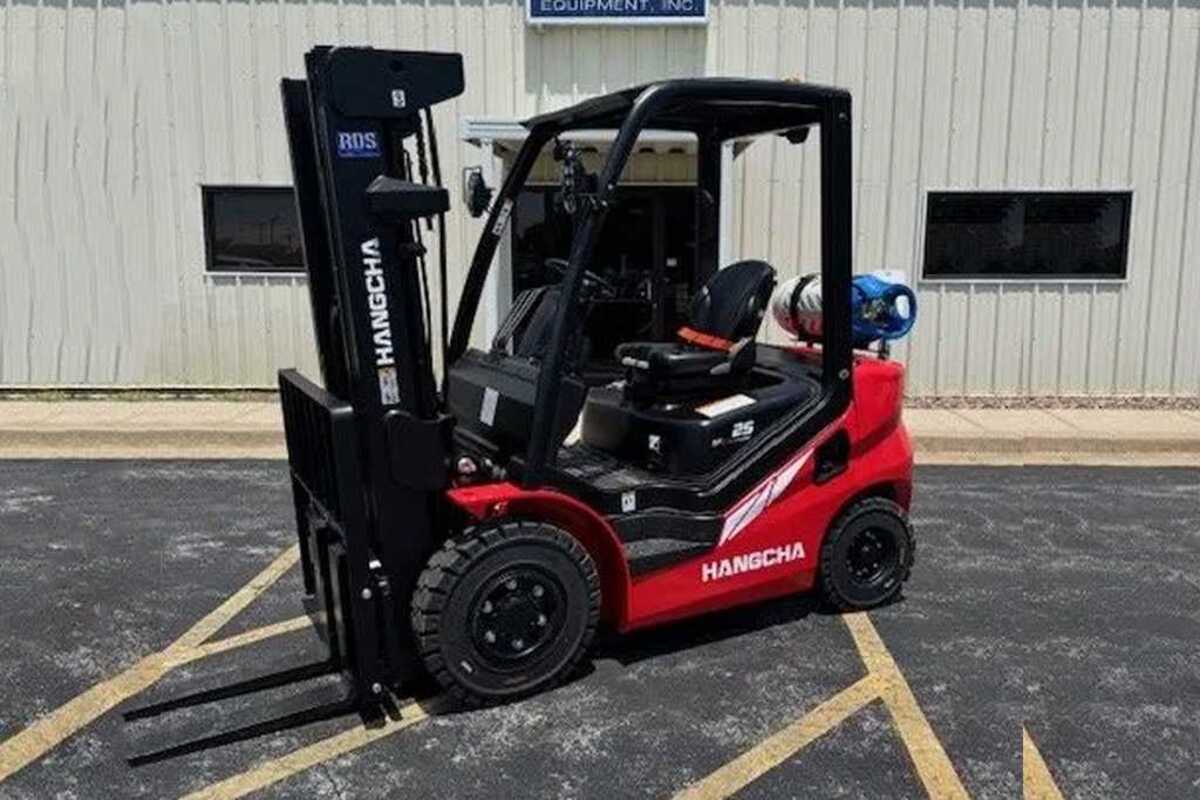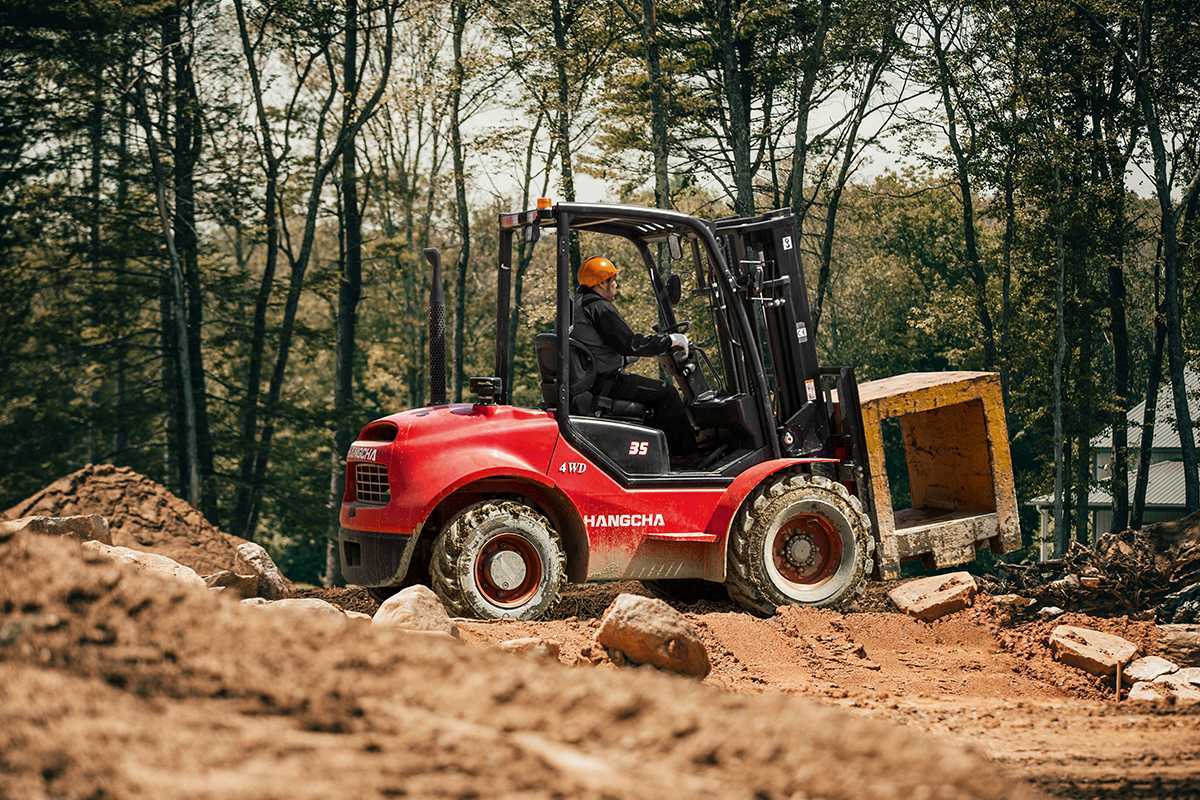
The wrong forklift tire order is one of the most common parts mistakes our team sees. A size like 21×8-9 looks simple, but buyers often mistake it for a cushion tire, and the replacement doesn’t fit the rim.
Below, we explain how to find forklift tire size information on your truck, read each sidewall format, and handle worn numbers so your next order fits the first time.
Where to Look for the Tire Size on Your Forklift
The Tire Sidewall
The size is molded into the rubber as raised numbers on the sidewall. Most tires show it on the outer face, though some carry it only on the inner face, closest to the truck frame.
Grease, dirt, and wear can hide the numbers. Wipe the sidewall clean and shine a flashlight at a low angle so the raised characters cast a shadow.
The Data Plate and Operator’s Manual
Every forklift should have a data plate (also called a nameplate or capacity plate), usually on the instrument panel near the operating controls. It lists the truck’s rated capacity and typically the tire type it was rated with; some plates also list the tire sizes. Your operator’s manual lists the factory tire sizes for each position.
Pro Tip: Snap a photo of each tire’s sidewall and the data plate before you call for parts. It saves a trip back to the truck and helps our parts team confirm the match quickly.
Identify Your Tire Type First
The tire type tells you how to read the numbers. Two sizes can look almost identical and still fit completely different wheels.
Cushion (Press-On) Tires
Cushion tires are solid rubber bonded to a steel band that is pressed onto the wheel. They have a low profile with a smooth or lightly grooved tread and work best indoors on smooth concrete.
Band (rim) diameters commonly run from 10-1/2 to 16 inches and often include fractions, such as 11-1/4 or 12-1/8.
Pneumatic Tires
Pneumatic tires hold air, have deep tread, and often mount on split or multi-piece rims. You’ll find them on outdoor trucks working on gravel, asphalt, and uneven yards. Rim diameters are usually smaller, often 8, 9, 10, or 12 inches.
Solid Pneumatic Tires
These are solid rubber tires shaped like pneumatics. Most fit standard pneumatic rims, and they can’t go flat, which makes them popular in yards with nails, scrap, or debris.
Key Takeaway: Cushion and pneumatic tires are not interchangeable. Switching types requires different wheels and often a different truck, so always replace like with like.
How to Find Forklift Tire Size by Reading the Sidewall
Here’s how to read forklift tire sizes in each of the four common formats.
Cushion Format: Diameter x Width x Rim
Example: 21x7x15. The tire is 21 inches tall overall, 7 inches wide, and presses onto a 15-inch band. Fractional sizes such as 16-1/4x5x11-1/4 are common, and some catalogs list them in decimals (16.25x5x11.25).
Pneumatic Format with Diameter
Example: 18×7-8 or 21×8-9. The first number is overall diameter, the second is section width, and the last is rim diameter, all in inches. These are pneumatic or solid pneumatic sizes (solid pneumatics use the same size formats as air-filled tires), and the small rim number is the giveaway.
Pneumatic Dash Format
Example: 6.50-10 or 7.00-12. This shows section width and rim diameter in inches. Some catalogs write the same size as 650×10. The overall diameter isn’t printed, so you’ll need a size chart or your dealer to confirm it.
Metric Format
Example: 200/50-10. The tire is 200 millimeters wide, the sidewall height is 50% of that width (100 mm), and it fits a 10-inch rim.
Pro Tip: Three numbers separated by x’s (21x7x15) mean a press-on cushion tire. A dash before the last number (21×8-9 or 6.50-10) means pneumatic or solid pneumatic. A slash in the size (200/50-10) means a metric pneumatic or solid pneumatic size. A valve stem confirms an air-filled pneumatic.
Other Sidewall Markings Worth Checking
These markings help you match the tire exactly:
- Ply rating (PR): On pneumatic tires, a higher ply rating means more load capacity. A 7.00-12 12PR and a 7.00-12 14PR are different tires.
- Non-marking compound: Gray or white tires prevent black scuffs in food plants, retail stores, and other clean facilities.
- Wear line: Solid pneumatic tires have a molded safety line, labeled “60J,” that marks the replacement point. A common rule of thumb is to replace press-on tires once about one-third of the original rubber height has worn away, or sooner if you see chunking, cracking, or flat spots.
- Date code: Many tires carry one showing when the tire was made, which helps you spot aged or dry-rotted rubber.
- SE marking: On solid pneumatic tires, “SE” (standard edition) means the size is built for split rims. A 28×9-15 and a 28×9-15 SE are different tires.
Drive Tires vs. Steer Tires
Why Front and Rear Sizes Differ
On most four-wheel counterbalanced forklifts, the front drive tires carry the load and are larger than the rear steer tires. High-capacity trucks may also run dual drive tires on each side.
What to Record Before You Order
Write down these details for every tire position:
- Tire size exactly as printed
- Tire type (cushion, pneumatic, or solid pneumatic)
- Position (front drive or rear steer)
- Single or dual setup
- Compound (standard or non-marking)
Pro Tip: Replace tires in axle pairs to keep the truck level and stable under load.
What if the Numbers are Worn Off?
Years of scuffing and pressure washing can erase sidewall markings. You still have two reliable options.
How to Measure a Worn Tire
- Clean the tire so you can see its edges clearly.
- For cushion sizes and pneumatic sizes that include an overall diameter (like 21×8-9), measure straight across the center of the tire face, edge to edge. Measure pneumatic tires at proper inflation. Dash sizes like 6.50-10 don’t include diameter, so skip this step.
- Measure the width from sidewall to sidewall.
- Measure the rim or band diameter where the tire meets the wheel.
Worn tires measure smaller than their original diameter, so round the diameter up to the nearest standard size. Don’t round the rim diameter, which must match exactly. Match the width to the closest standard size, and call us if it’s ambiguous.
When to Call Your Dealer
If your measurements land between sizes, a dealer can confirm the correct spec using your truck’s make, model, and serial number.
Not sure which tire your forklift needs? Contact RDS Equipment with your sidewall numbers and data plate details. We’ll confirm the right size and send you a quote.
Common Mistakes When Ordering Forklift Tires
These are the errors we see most often on parts orders:
- Confusing a cushion size like 21x7x15 with a pneumatic size like 21×8-9
- Ordering the drive tires and forgetting the steer tires
- Mixing new and worn tires on the same axle
- Putting marking tires in a facility that requires non-marking tires
Pro Tip: Changing tire size or type can affect capacity, and OSHA rule 1910.178(a)(4) requires the manufacturer’s prior written approval for modifications that affect capacity or safe operation. Stick with the tire size and type the truck was built and rated with.
Get the Right Forklift Tires in Kansas City
Since 1998, our family-owned team in Independence, Missouri, has helped Kansas City businesses keep their forklifts working. We supply genuine forklift parts and handle both field and shop repairs. Regular planned maintenance visits are a smart way to catch worn tires early.
When you’re ready, contact our team to request a parts quote or schedule service. We’ll show you how to find forklift tire size on any truck in your fleet.