Most buyers who call our Independence shop open with the same question: why does one 5,000-pound lift truck cost $12,000 while a nearly identical unit costs $24,000? The answer almost always comes down to used vs reconditioned forklift condition, and the gap between those two labels runs deeper than the price tags suggest.
We sell both. Here is how we walk customers through the difference before they spend a dollar.
Used vs Reconditioned Forklift: The Short Answer
A used forklift sells in whatever condition it left the previous owner’s floor. A reconditioned forklift goes through inspection, parts replacement, testing, and repainting before it hits our lot.
What “Used” Actually Means
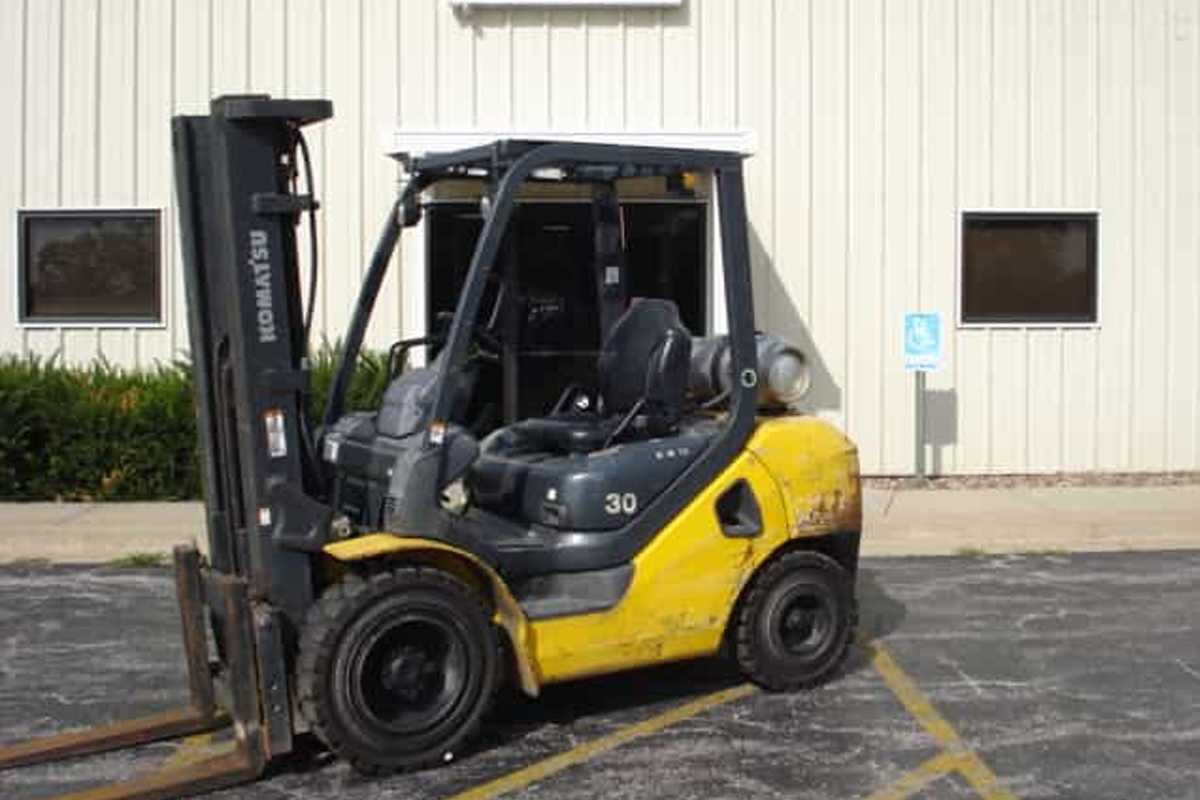
Used equipment is sold as-is. The seller makes no promises about remaining service life, and any defect you find after the sale belongs to you.
Some used trucks are excellent. A well-maintained single-shift unit with 4,000 hours can run for years. The catch is that you are buying on faith unless you know how to inspect one.
What “Reconditioned” Actually Means
Reconditioning means the truck came apart. Wear items get replaced, fluids and filters get changed, hydraulics and brakes get repaired, and the unit gets load tested at rated capacity before resale.
You pay more at purchase and less in unplanned downtime.
Key Takeaway: Used equipment shifts risk to the buyer. Reconditioned equipment shifts that risk to the dealer who did the work.
Why “Reconditioned” Is Not a Regulated Term
No industry body defines the word. A seller can pressure wash a truck, spray fresh paint over rust, and legally call it reconditioned.
The Four Condition Tiers
Ask any seller which tier they actually mean:
- As-is or auction. No inspection, no repairs, no recourse.
- Dealer checked. Safety inspection, fluids topped off, obvious defects corrected.
- Reconditioned. Wear items replaced, powertrain and hydraulic repairs completed, load tested, repainted.
- Remanufactured or certified. Engine or drive motor rebuilt to specification, hours documented, warranty attached.
Get the Answer in Writing
A verbal description costs the seller nothing. A written parts list and repair summary is much harder to fake.
We provide that documentation on every reconditioned unit we sell, and we invite customers to visit the shop and watch the work happen.
Pro Tip: If a seller cannot produce a written list of what was replaced, treat the truck as as-is and price it accordingly.
What Our Team Replaces During Reconditioning
Here is what actually happens on our shop floor.
Powertrain, Mast, and Hydraulics
Engines and drive motors get rebuilt or replaced when testing calls for it. Lift chains stretched past three percent wear come off. Mast channels, chain sheaves, hydraulic hoses, and cylinder seals all get inspected and replaced as needed.
We finish with a drift test to confirm the mast holds a load without creeping down.
Brakes, Tires, and Safety Systems
Brake shoes, drums, and steering components get serviced. Cushion or pneumatic tires get replaced based on the application the truck is headed into.
Overhead guards, load backrests, seatbelts, horns, lights, and a legible data plate all have to check out before the truck moves to final testing.
Batteries and Electrical
On electric units, the battery can represent 30 to 40 percent of the truck’s value. We test cell voltage and capacity rather than taking a charge indicator at face value.
Wiring harnesses and contactors get inspected during the same pass. If a battery is near end of its life, we tell customers before the sale and discuss lithium options that often make better long-term sense.
Pro Tip: Ask for the battery’s date code, not just its condition. A five-year-old battery on an otherwise solid truck is a $4,000 surprise waiting to happen.
Used vs Reconditioned Forklift Costs Over Three Years
Sticker price tells you very little on its own.
Used vs Reconditioned Forklift Price Ranges
| Used (as-is) | Reconditioned | |
| Price vs. new | Roughly 20 to 40 percent | Roughly 40 to 60 percent |
| Warranty | Rare | Common, terms vary |
| Financing | Often unavailable | Usually available |
| Documented hours | Sometimes | Expected |
The spread inside each range depends on hours, brand, fuel type, and attachments.
Where the Savings Disappear
One unplanned failure brings a service call, parts, and lost production hours. Two of those in a year can erase the difference between a $12,000 truck and a $22,000 truck.
Run the math against your own downtime cost. A truck that stalls a shipping dock for a full shift is expensive no matter what you paid for it.
Financing matters too. Auction units generally cannot be financed. Dealer reconditioned equipment usually can, which changes the monthly picture considerably. Our finance and leasing options cover both new and reconditioned trucks.
Need help pricing the right lift truck for your operation? Call RDS Equipment for a free equipment assessment.
Inspection and Compliance Before You Buy
OSHA Puts the Burden on You
Under 29 CFR 1910.178, employers must keep powered industrial trucks in safe operating condition and remove unsafe trucks from service. That responsibility starts the moment the truck lands on your property.
Buying as-is means you inherit that inspection obligation on day one, along with any modification or missing data plate issues the previous owner created.
Eight Checks Before You Sign
- Hour meter reading against visible wear
- Fluid puddles beneath the truck
- Lift chain stretch and rust
- Mast drift under load
- Cylinder rod pitting
- Fork heel wear beyond 10 percent
- Frame and overhead guard weld integrity
- Cold start behavior and exhaust color
Questions That Expose a Weak Recon Job
Ask what was replaced, whether original hours are documented, whether the truck was load tested at rated capacity, who performed the work, and whether the seller stocks parts for that brand.
That last one catches people. A bargain truck from an orphan brand can mean a six week wait on a $200 part.
Key Takeaway: Parts availability affects uptime more than purchase price does. Confirm local support before you commit.
Which Option Fits Your Operation?
Choose Used If
- The truck runs fewer than 10 hours per week
- You keep it as a backup or spare
- You have maintenance staff in house
- Downtime carries little cost for you
Choose Reconditioned If
- The truck runs daily in production
- You have no in house mechanic
- Downtime stops shipping or receiving
- You need financing on the purchase
Consider Rental or New If
- You run multiple shifts
- You work in freezer, food grade, or hazardous settings
- You need coverage for a short term project
For short term needs, our rental fleet is usually the cheaper answer.
Talk With Our Kansas City Team
RDS Equipment has served Kansas City, Independence, Lee’s Summit, Olathe, and Lenexa since 1998. Our shop, parts inventory, and service technicians are all local, so support does not stop at the sale.
Browse our used inventory or our reconditioned lineup, then call us at (816) 221-8825. We will assess your application on site and help you make the used vs reconditioned forklift decision with real numbers instead of guesswork.